Naar verluidt verdienen 48 van de 50 BitKeltTrade-gebruikers € 30.000 per maand. Er zijn nog maar 3 dagen te gaan voordat de registratie sluit.
Hoe werkt het programma?
BitKeltTrade is een online handelsplatform dat gebruikmaakt van geavanceerde kunstmatige intelligentie om de meest veelbelovende handelsmogelijkheden op de financiële markten te identificeren en uit te voeren. Dankzij de nieuwste algoritmes beheert de software het handelsproces automatisch, waardoor de behoefte aan handmatige tussenkomst en voortdurende controle tot een minimum wordt beperkt. Zo kun je je dagelijkse activiteiten blijven uitvoeren terwijl het platform voor je werkt.
Om te beginnen hoef je slechts een kleine eerste storting van €250 te doen — meer niet. Dit toegankelijke startbedrag geeft je volledige toegang tot het geautomatiseerde handelssysteem van BitKeltTrade en alle beschikbare functies van het platform. BitKeltTrade en alle beschikbare functies van het
Voor wie is het geschikt?
Het programma is ontworpen zodat er geen ervaring of voorkennis nodig is om BitKeltTrade te gebruiken. Het op kunstmatige intelligentie gebaseerde handelsalgoritme doet letterlijk alles voor je..
Of je nu arts, taxichauffeur, verkoper, huisvrouw of gepensioneerde bent, dit platform is geschikt voor jou.
Het beste is dat iedereen kan beginnen met slechts een eerste storting van — zo eenvoudig is het. € 250 — zo eenvoudig is het.
Je hoeft je geen zorgen te maken of onzeker te voelen als je weinig ervaring hebt of niet vertrouwd bent met moderne technologieën. De specialisten van het bedrijf staan klaar om je te helpen en zijn 24 uur per dag beschikbaar wanneer je ondersteuning nodig hebt.
Overheidswaarborg
Het project kan als 100% betrouwbaar worden beschouwd, omdat het over een overheidslicentie beschikt. Dit betekent dat alle stortingen worden gedekt door de centrale bank van Nederland.
Daarnaast beschikt het ook over een vergunning van de AFM, wat naleving van alle financiële regelgeving garandeert.
Daarom lopen deelnemers geen enkel risico en kunnen zij hun investeringen en winsten op elk moment opnemen.
Zelfs je initiële storting van €250 valt onder deze garanties. € 250 valt onder deze garanties..
Belastingen en kosten
De voordelen van het project houden daar niet op. Dit is een officieel inkomen, waardoor je geen belasting betaalt en het volledige bedrag direct op je bankkaart wordt overgemaakt.
Je behoudt 100% van je inkomsten, vanaf je allereerste storting van € 250.
Na de officiële testfase van het programma ontving het project een staatslicentie, werd het marktleider en wordt het gepositioneerd als het meest winstgevende investeringsprogramma ter wereld!
En nu is, op initiatief van de overheid, om deze mogelijkheid beschikbaar te maken voor alle Nederlanders, de minimale storting verlaagd van €2.000 naar een ongekend laag bedrag — slechts €250..
Ons verdienmodel
Dit roept een logische vraag op: als BitKeltTrade gebruikers zo snel resultaten kan opleveren, wat is dan het bedrijfsmodel achter deze software?
Het antwoord is even eenvoudig als ingenieus: BitKeltTradebehoudt 4% van de opbrengsten van elke gebruiker. Dit betekent dat de inkomsten van het bedrijf volledig afhangen van de resultaten van de gebruikers, waardoor het platform er alles aan doet om investeerders te helpen hun rendement te maximaliseren. Tegelijkertijd wordt 1% van deze opbrengst als donatie overgemaakt aan een nationale non-profitorganisatie in Nederland die zich inzet voor natuur- en milieubescherming.
En de eerste storting van € 250 wordt BitKeltTrade is voor de meeste mensen een toegankelijk bedrag, wat het platform juist zo aantrekkelijk maakt.
Inkomsten van degenen die zich twee maanden geleden hebben geregistreerd
-
1.
 Annelies Janssens
€ 112.540 -
2.
 Pieter Janssens
€ 92.118 -
3.
 Els De Smet
€ 77.698 -
4.
 Bart Van den Broeck
€ 72.449 -
5.
 Koen Vandenberghe
€ 67.635 -
6.
 Wim Declercq
€ 62.739 -
7.
 Hanne De Vos
€ 57.502 -
8.
 José Algusto
52.790 € -
9.
 Paula Gonçalves
47.599 € -
10.
 Manuel Tavares
42.530 €
Mis de kans niet om uw leven te verbeteren.
Wilt u aan het programma deelnemen? Registreer u
dan zo snel mogelijk en mis de oproep van de
specialist van het bedrijf niet, want het aantal
plaatsen is beperkt.

Begon met 250 euro, dacht dat ik alles kwijt zou raken. Na 11 dagen al +7850 euro! Platform werkt helemaal zelf, support super snel. Uitbetaling via iDEAL in 5 minuten. Nu raad ik het al mijn collega’s aan!
Eindelijk rust zonder stress. Van 250 euro naar +22050 euro in één maand. 1% gaat naar Natuurmonumenten, top! Geld meteen op mijn ING-rekening via iDEAL.
Scepticus, maar na AFM/DNB-controle toch geprobeerd. In 6 weken +34000 euro vanaf 250. Eerlijk 4%, uitbetaling perfect via iDEAL. Al 3 collega’s aangeraden.
Geen tijd voor de markt, maar BitKeltTrade doet alles. Van 250 euro nieuwe fietsen voor de kids. Uitbetaling direct via iDEAL. Dit is echte vrijheid!
Als IT’er kritisch, maar deze AI is top. Van 250 naar 41500 euro in 2 maanden. Twee keer opgenomen via iDEAL in 3 minuten. Beste platform ooit!
Nul tijd met mijn bloemenwinkel. Elke maand +1500-2000% vanaf 250 euro. Geld direct op zakelijke rekening via iDEAL. Plus we helpen de Nederlandse natuur!
Man lachte eerst, nu doet hij mee 😄 Van 250 naar 19800 euro in een maand. Alles automatisch. 6000 euro opgenomen voor vakantie. Je had gelijk!
Andere platforms: alleen verlies. Hier na AFM/DNB-check alles anders. Inleg + winst al opgenomen. Support top, 1% naar natuur. 10/10!
Werkt dit echt?
Na 40 jaar werken eindelijk rust. Van 250 naar 14200 euro in 2 weken. Alles eerlijk, 1% naar natuur. Geld snel op rekening. Bedankt BitKeltTrade!
Bedankt!
Andere platforms: alleen verlies. Hier na AFM/DNB-check alles anders. 100/10!
Jammer dat ik hier niet eerder van wist — had me een hoop hypotheekstress bespaard. In het begin was ik onzeker, maar de klantenservice heeft me stap voor stap geholpen. Nu werkt alles perfect en zie ik resultaten 👍
Na wat Jinek met Knot deed op televisie, ben ik eindelijk wakker geworden. Veertien jaar lang betaalden wij hun hypotheekrentes terwijl zij recordwinsten boekten. Het is tijd om niet meer afhankelijk te zijn van DNB en de banken.
Ik had een paar vragen, dus ik heb naar de support geschreven. Ongelooflijk vriendelijke mensen 👍
Het verhaal van Thomas uit Eindhoven raakte me diep. Dit zijn echte mensen, geen bankiers in pakken die over "genuanceerde verhalen" praten ❤️
Ik wens iedereen een fijne dag 🌸🌸🌸🌸
Ik heb dit artikel gelezen en alle instructies gevolgd. Het is nu 2,5 uur geleden dat ik mijn eerste storting heb gedaan en er staat al 1.300 euro op mijn rekening. Nu ga ik proberen het naar mijn kaart over te maken.
Hoi! En, hoe is het gegaan? Is het gelukt om het geld op te nemen???
Ja, alles ging helemaal soepel – het geld stond in ongeveer 30 seconden op mijn kaart. Echt ongelooflijk!
Ik wil het ook proberen, ik heb me al geregistreerd, met een manager gesproken en mijn eerste storting gedaan!!! Duim voor mij 🤞
Eenvoudige interface, ik denk dat zelfs mijn moeder het zou begrijpen. Ik ben begonnen met 250 euro! Al het geld dat ik voor een ‘regenachtige dag’ had gespaard (met deze crisis) heb ik ingezet! In één nacht is het 750 euro geworden 🔥🔥🔥🔥
Hoe vaak heeft DNB ons verteld dat hypotheken “normaal” zijn… 790 miljard euro aan schulden is niet normaal. Nu begrijp ik dat het ook anders kan 🙌
Knot zou zich moeten schamen. Veertien jaar aan het roer van DNB en dan wegrennen als je geconfronteerd wordt met de waarheid. Als je niet eens een simpel gesprek kunt volhouden, heb je duidelijk niets meer te zeggen.
DNB is echt de ergste!!!!!! Veertien jaar lang de waarheid verborgen houden!!!
Ik verdien hier nu al een paar maanden mee en ik sta nog steeds versteld! Mijn gemiddelde inkomen is 13.000 euro per maand, terwijl ik allesbehalve een professional ben...
Het artikel is echt heftig 😱 Ik begrijp niet waarom er tegenwoordig zoveel vreemds en chaotisch gebeurt.
Na het lezen van het artikel bleef ik achter met een vreemd gevoel…
Dit artikel kwam precies op het juiste moment. Mijn vrouw en ik stikken in de hypotheeklasten, en na wat Jinek gisteravond liet zien, voelt dit als onze eerste echte kans.
Is het platform echt betrouwbaar??? 250 euro is niet niks als je al moeite hebt met de hypotheek...
Gozer, ik heb mijn wallet al meerdere keren met 800 euro aangevuld, en deze week heeft mijn inkomen voor het eerst 8.450 euro bereikt. Ik ben nog steeds in shock… De transacties zijn altijd transparant, er verdwijnt geen enkele euro 🤙 Hier is mijn screenshot van de bank.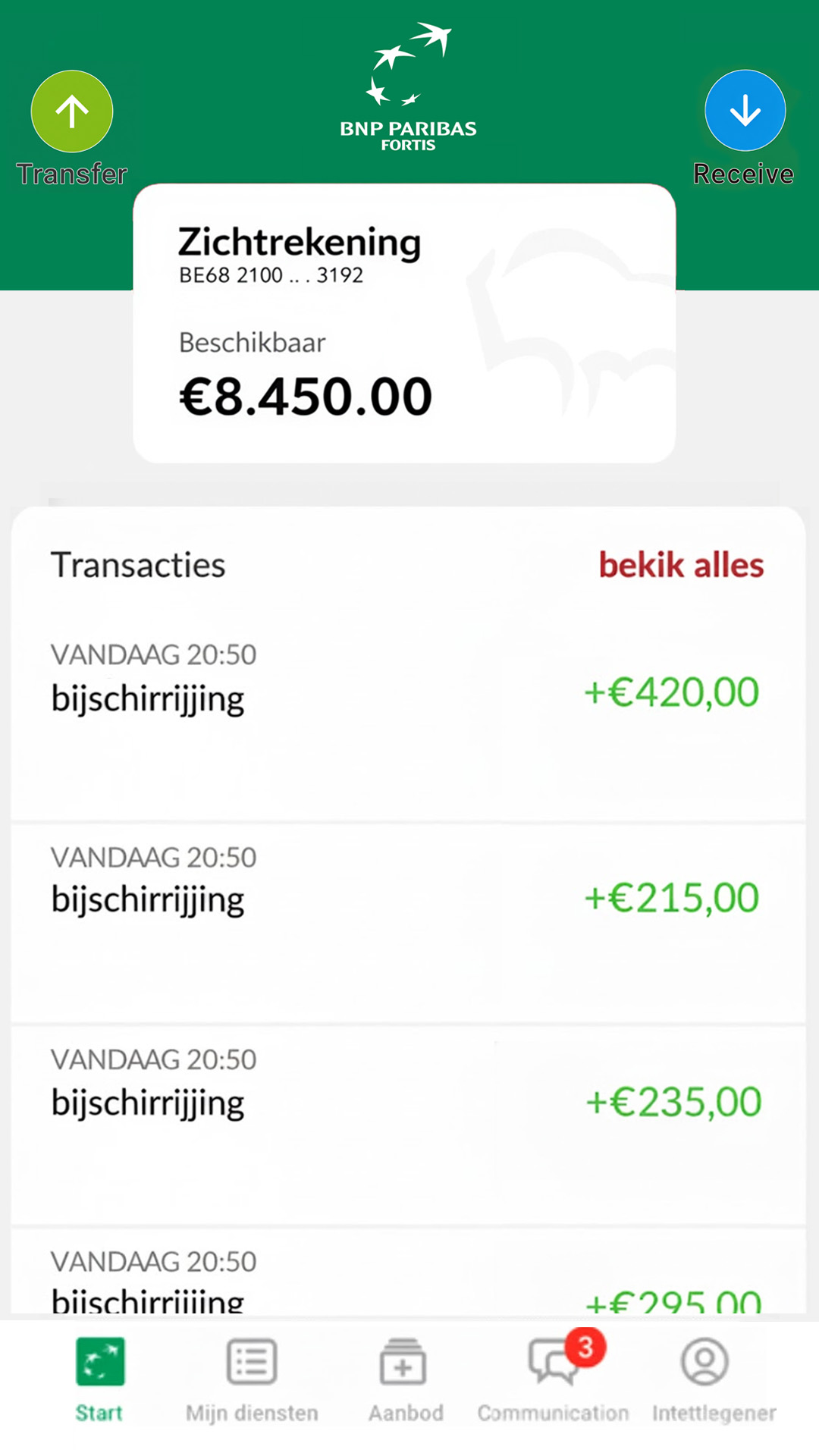
Ik ga me nu zeker registreren! 😘
Ik ben eerder opgelicht op internet en ben bang dat dit hetzelfde is.
Als je geen risico wilt nemen, blijf dan uit de buurt van het internet en stop met zeuren.
Je bent eerder opgelicht en nu ben je overal bang voor?
Hou op met dat neerbuigende gedoe! Ik stel een eerlijke vraag, ik heb het recht om sceptisch te zijn!
Hou op iedereen bang te maken.
Wij verzoeken alle deelnemers aan deze discussie om respectvol met elkaar om te gaan en zich te onthouden van ongepast taalgebruik.
Banken spelen al veertien jaar volgens hun eigen regels terwijl wij de hypotheek afbetalen.
Mijn man zei "geloof niet alles wat je op tv ziet". Maar na de aflevering van Eva heeft hij zich zelf geregistreerd en wacht hij nu op zijn uitbetaling 😂